

Key Takeaways
- The island of Bermuda functions as a British Overseas Territory in the north Atlantic, comprising approximately 181 small islands with seven main islands connected by bridges and causeways into a single landmass of roughly 54 square kilometers.
- Bermuda holds a dual identity: a historic English settlement dating from 1609–1612, and today, a world hub for tourism and international business—particularly insurance and reinsurance—with one of the highest per-capita incomes globally.
- The subtropical climate brings mild winters and warm summers, while pink sand beaches, extensive coral reefs, and attractions like the UNESCO world heritage site of St. George’s, Crystal Caves, and the Royal Naval Dockyard draw over half a million visitors annually.
- Politically, Bermuda operates under Bermuda’s constitution established in 1968, granting internal self-government with the British monarch as head of state, while Bermudians gained access to full British citizenship through a 2002 UK law change.
- Reaching the island of Bermuda takes roughly two hours by air from New York or Boston, with optimal travel seasons in late spring and autumn; the Bermudian dollar remains pegged 1:1 to the U.S. dollar for seamless transactions.
Introduction to Bermuda
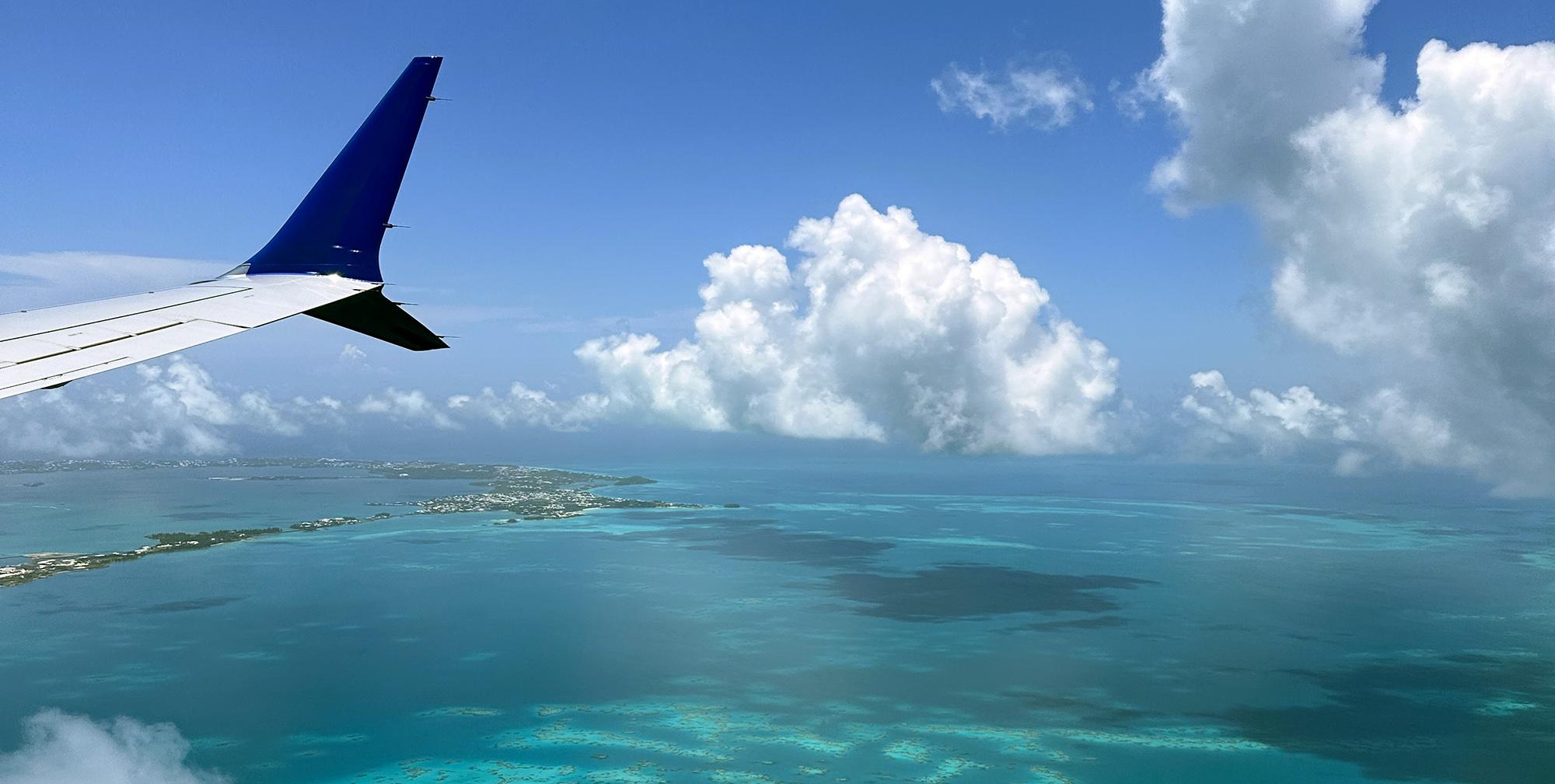
Positioned in the western north atlantic approximately 1,035 kilometers east southeast of Cape Hatteras, North Carolina, Bermuda occupies a curious place in the world—small in physical footprint yet commanding an outsized presence in global finance, maritime history, and the imagination of travelers. The Bermuda islands form an archipelago of around 181 islands and islets, with roughly 20 inhabited, all connected by more than 140 bridges and causeways that create what visitors experience as a single, elongated landmass shaped something like a fishhook.
The historical arc of this place runs from accidental English discovery in 1609, when the Sea Venture wrecked on these reefs during a hurricane, through centuries as a maritime outpost and naval stronghold, to its present standing as a leading center for tourism and international business. Spanish captain Juan de Bermúdez sighted the islands around 1503 and lent them his name, though settlement would wait another century.
Today, Bermuda maintains a reputation built on pink sand beaches, waters of remarkable clarity, and the cultural intrigue of being one point of the so-called Bermuda Triangle—a region whose mysteries modern science has thoroughly explained through natural causes rather than anything supernatural. The island offers something increasingly rare: a place where centuries of history sit comfortably alongside contemporary sophistication, where the pace slows just enough to notice things.
Geography, Climate, and Natural Environment
The island of Bermuda rises from the Bermuda Platform, an extinct volcanic seamount that originated some 30 to 35 million years ago from a geological hotspot. That volcanic foundation now lies submerged more than 4,300 meters below the surface, capped by approximately 60 meters of marine limestone formed from coral, shells, and accumulated sediment over millennia. This porous limestone base means Bermuda has no rivers or freshwater lakes—a geographical fact that shaped both its architecture and its resourcefulness.
The island group’s layout centers on the main island, sometimes called Grand Bermuda, stretching about 22.5 kilometers in length but rarely exceeding 1.6 kilometers in width. Six smaller islands—Sandys, Somerset, Ireland, Boaz, St. George’s, and Longbird—complete the fishhook curve that defines the archipelago. Total land area amounts to roughly 54 square kilometers with 103 kilometers of coastline. The terrain consists of low, rolling hills, with the highest point at town hill reaching a modest 79 meters above sea level.
Climate Characteristics
The subtropical climate here benefits considerably from the Gulf Stream’s warming influence, creating stable temperatures that rarely dip into uncomfortable ranges. January typically sees highs around 20°C and lows near 17°C, while August brings warmer conditions with highs approaching 28°C and lows around 26°C. Humidity runs high year-round due to the surrounding Atlantic ocean, and annual rainfall averages approximately 1,500 millimeters, concentrated between May and October.
Hurricane season spans June through November, with peak vulnerability in August, September, and October. The fringing coral reefs offer some natural protection, though preparation remains essential during these months.
Natural Features
The ecosystems surrounding these islands hold particular significance:
- Rim Reef: The Atlantic’s northernmost coral barrier, creating diverse marine habitats
- Seagrass beds: Supporting juvenile fish populations and filtering coastal waters
- Subtropical dry forests: Featuring the endemic Bermuda cedar, once heavily deforested for shipbuilding but now gradually recovering
- The Bermuda petrel (cahow): Once thought extinct for three centuries, now carefully conserved through dedicated breeding programs
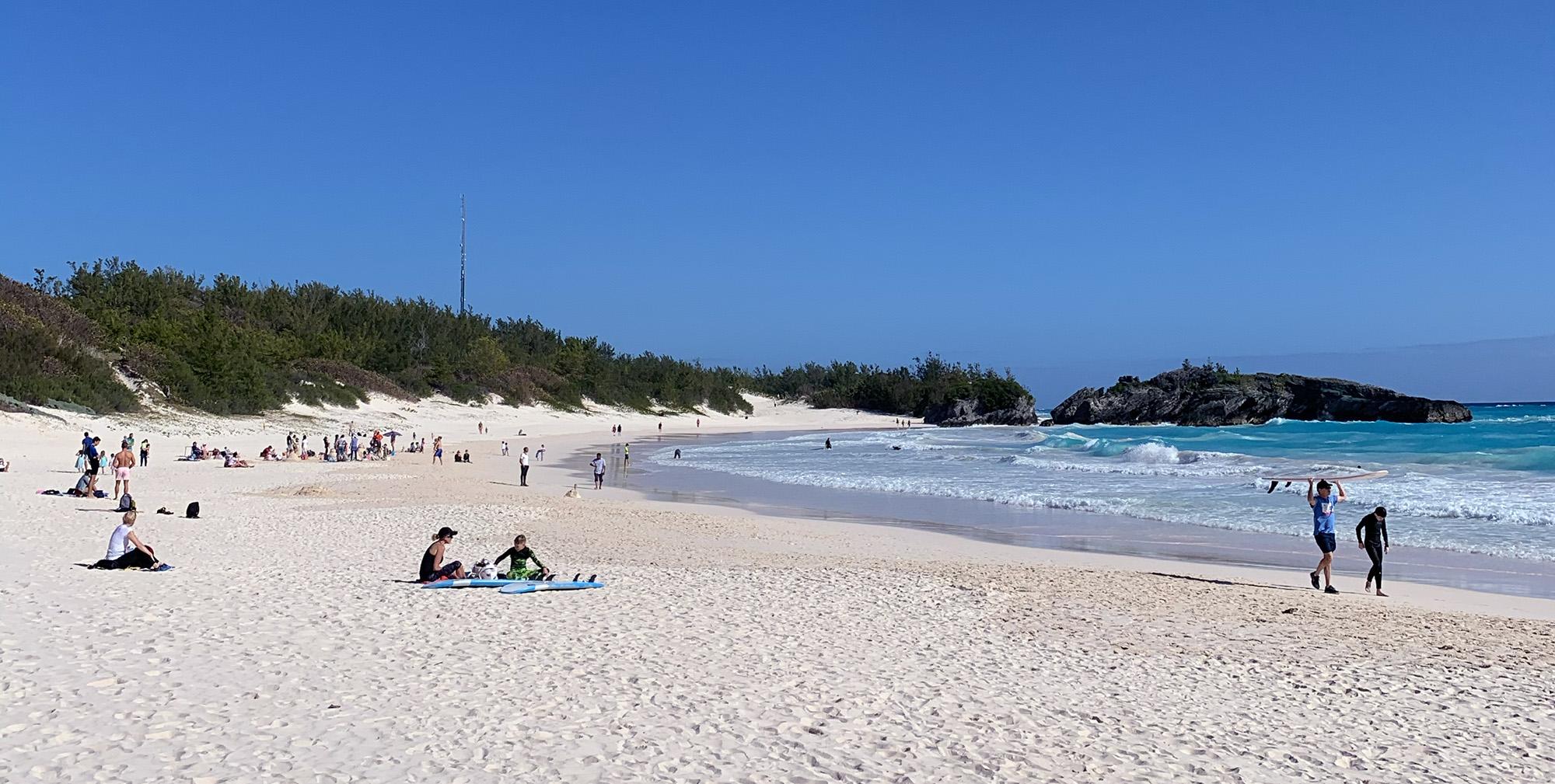
Standout natural attractions include Horseshoe Bay Beach with its distinctive pink sands, Warwick Long Bay offering expansive stretches of shoreline, and Crystal Caves—surreal underground formations discovered in 1905, featuring illuminated stalactites reflected in prehistoric underground lakes.
Historical Overview
Bermuda’s history intertwines with the broader narrative of Atlantic exploration, colonial ambition, and the shifting fortunes of maritime powers. Understanding this past adds depth to any encounter with the island’s present.
Discovery and Early Settlement
Spanish captain Juan de Bermúdez sighted these islands around 1503 during voyages through Atlantic waters, lending his name to the archipelago though making no attempt at colonization. The Spanish referred to them as “Devil’s Islands,” wary of the treacherous reefs and frequent storms that made approach hazardous.
The pivotal moment came in 1609 when Sir George Somers led a fleet toward Jamestown, Virginia, only to have his flagship, the Sea Venture, wrecked on Bermuda’s reefs during a hurricane. All 150 aboard survived, spending roughly ten months on the islands before constructing two new vessels—the Deliverance and Patience—from native Bermuda cedar and wreckage. This extended stay reportedly inspired William Shakespeare’s The Tempest, adding literary significance to the historical record.
Permanent English settlement began in 1612 when the Virginia Company dispatched colonists who established St. George’s, now recognized as the oldest continuously inhabited English town in the new world west of the Atlantic. The Somers Isles Company took over administration in 1615, and by 1620, the colony had established representative government—making it among the earliest self-governing territories under the British crown.
Colonial Development
The 17th and 18th centuries saw Bermuda evolve from attempted tobacco cultivation to more sustainable enterprises:
Period | Primary Activities |
|---|---|
1610s-1640s | Tobacco farming, early settlement |
1650s-1700s | Shipbuilding (cedar hulls prized for speed), salt trade from Turks Islands |
1700s-1800s | Privateering, whaling, maritime trade |
Early use of enslaved Africans, Native Americans from mainland North America, and Caribbean laborers shaped the population and economy. These communities would eventually form the foundation of Bermuda’s diverse ethnic groups.
Revolutionary and Victorian Eras
During the American War of Independence, Bermudians found themselves caught between loyalties. In 1775, local sympathizers facilitated the removal of 168 barrels of gunpowder from British stores, spiriting them to American rebels—an act of considerable risk given the colony’s official status under Great Britain.
The War of 1812 prompted massive British investment in fortifications, including the beginning of the Royal Naval Dockyard in 1809-1811. Built using convict labor over subsequent decades, this facility would become Britain’s key naval base in the western hemisphere, with the Commissioner’s House (completed in the 1820s) standing as the world’s first prefabricated cast-iron building shipped from England.
Following the abolition of slavery in 1834, Bermuda served various strategic roles: hosting blockade runners during the American Civil War, holding Boer War prisoners from 1901 to 1903, and developing its tourism industry with the arrival of steamship service in the late 1800s.
Twentieth Century Transformation
World War II brought significant American presence under the 1940 Destroyers for Bases Agreement. The United Kingdom leased land for U.S. military installations, including Kindley Field and other facilities that would serve Cold War surveillance operations into the 1990s. These bases employed thousands of Bermudians and significantly influenced the local economy.
The closure of foreign military bases by the mid-1990s coincided with Bermuda’s emergence as a major center for international business and finance—a transformation that continues to define its economic character today.

Government, Society, and Citizenship
The government of Bermuda operates under a constitutional framework established in 1968, making it the oldest self-governing British Overseas Territory. This system combines Westminster-style parliamentary democracy with internal autonomy, while the United Kingdom retains responsibility for defense and external affairs.
Constitutional Structure
The British monarch serves as head of state, represented on the island by a governor who performs several key functions: appointing the premier from the majority party in the legislature, giving assent to legislation, and overseeing security and judicial appointments. This arrangement places Bermuda firmly within the British empire’s modern constitutional inheritance while allowing substantial local control.
The bicameral legislature consists of two chambers:
Chamber | Composition | Selection Method |
|---|---|---|
house of assembly | 36 members | Elected by single-member constituencies, up to five-year terms |
upper house (Senate) | 11 members | 5 advised by premier, 3 by opposition leader, 3 at governor’s discretion |
Political Evolution
Party politics since the late 20th century has seen significant shifts. The United Bermuda Party dominated for decades following the establishment of universal adult suffrage in 1968. The Progressive Labour Party, led at various times by figures including Jennifer Smith, eventually formed government. The One Bermuda Alliance emerged in 2011 from various political reorganizations, including elements from the Bermuda Democratic Alliance and earlier groupings, creating a dynamic multiparty landscape.
The supreme court and judicial system operate under English common law traditions, with ultimate appeals possible to the Judicial Committee of the Privy Council in London.
Demographics and Society
Bermuda’s estimated population of 64,000 to 65,000 residents creates one of the world’s highest population densities at roughly 1,200 people per square kilometer. The majority of residents trace full or mixed ancestry to Africa, reflecting the island’s history of slavery and subsequent migration. Significant White communities (primarily of British and Irish descent) and Portuguese-descended communities (largely from 19th-century Azorean immigration) contribute to the social fabric.
English serves as the official language, with Portuguese spoken in certain community contexts. Christian denominations predominate, including Anglican, Catholic, African Methodist, and Baptist congregations.
Citizenship and Nationality
The path to British citizenship for Bermudians reflects the territory’s evolving relationship with the United Kingdom:
- Historical status: British subjects through royal charters dating to colonization
- 1983 reclassification: British Dependent Territories Citizens
- 2002 change: Entitlement to full British citizenship and passports granted to most Bermudians
This 2002 law change significantly enhanced mobility options for Bermudians, allowing residence and work rights throughout the UK and, until Brexit, the European Union.
Immigration and residency policies remain relatively strict. Work permits typically limit guest worker employment to five or six years, while pathways to permanent residency often require substantial economic investment or extended contribution to the community.
Social indicators rank high by global standards: life expectancy around 81 years, literacy rates near 99%, free public education through age 18, and healthcare delivered through a public-private system that maintains modern standards.
Administrative Divisions and Key Settlements
Bermuda divides into nine parishes and two incorporated municipalities—a structure tracing back to early colonial land apportionment when the Somers Isles Company parceled territory into “shares” for investors and settlers in 1615.
The Nine Parishes
Running roughly from west to east along the main island chain, the parishes are:
- Sandys Parish (westernmost): Home to Somerset Village and the Royal Naval Dockyard
- Southampton Parish: Known for southwestern beaches and resort properties
- Warwick Parish: Central south, including Horseshoe Bay and Warwick Long Bay
- Paget Parish: Residential and Botanical Gardens and King Edward Memorial Hospital
- Pembroke Parish: Contains government buildings and surrounds the city of hamilton
- Devonshire Parish: Central location with residential areas
- Smith’s Parish: Near the airport, includes Tucker’s Town’s exclusive residential areas
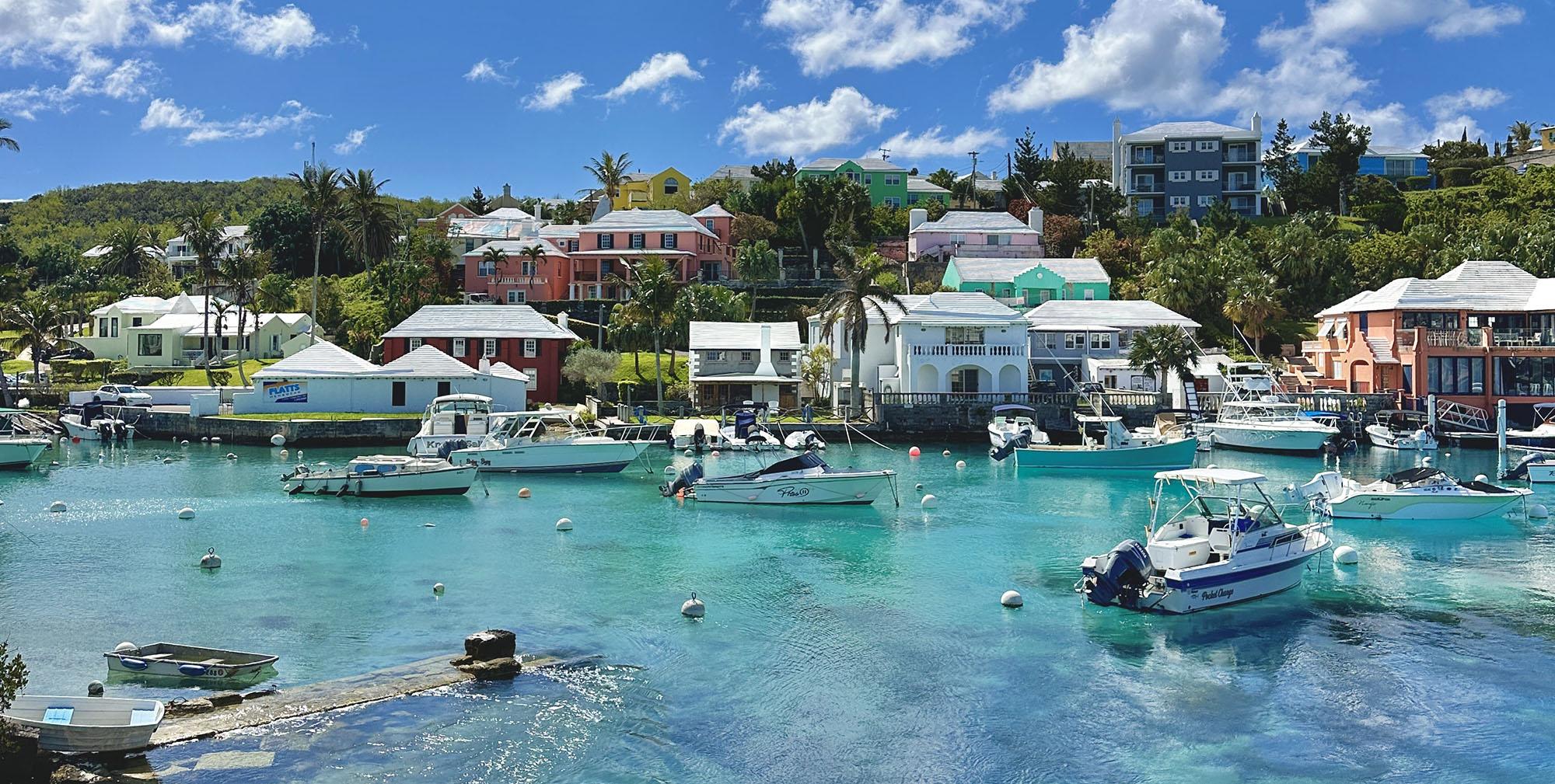
- Hamilton Parish: Features Flatts Village, the aquarium, and Bailey’s Bay
- St. George’s Parish (easternmost): Historic northeast including the town of St. George’s
The Two Municipalities
The city of Hamilton, located in Pembroke Parish by Hamilton Harbour, has served as capital since 1815 and functions as the commercial and governmental heart of Bermuda. Modern office buildings housing international business firms rise alongside the harbor, while Front Street offers retail and dining.
The historic town of St. George’s, situated on St. George’s Island in the eastern parishes, served as the original capital and retains much of its 17th-century character. Designated a UNESCO World Heritage Site, its narrow lanes, historic fortifications, and centuries-old churches make it essential for understanding Bermuda’s historical significance.
Other notable communities include Flatts Village at a key channel connecting Harrington Sound to the sea, and Somerset Village in Sandys, offering a quieter atmosphere away from Hamilton’s bustle.
Economy and Modern Life
Bermuda enjoys one of the world’s highest per-capita incomes—approximately $118,000 by purchasing power parity—built on two primary pillars: international business and tourism.
International Business Sector
The concentration of global insurance and reinsurance companies in Bermuda has made it a major force in international finance. Over 1,200 insurers and reinsurers operate from the island, along with corporate registrations, trusts, funds, and professional services firms. This sector accounts for roughly 60% of GDP.
The Bermuda Monetary Authority, established in 1969, provides regulatory oversight for financial services and issues the Bermudian Dollar (BMD), introduced in 1970 to replace the Bermudian pound. The currency remains pegged 1:1 to the U.S. dollar, with both currencies circulating freely on the island.
Bermuda’s tax structure—no corporate income tax on most forms of offshore business, with revenue generated instead through payroll taxes and customs duties—has attracted substantial international investment. The political stability, English common law system, and efficient incorporation processes reinforce this appeal.
Tourism Industry
Tourism contributes approximately 5-6% of GDP directly, with over half a million visitors annually in typical years. The primary markets include the United States (particularly the East Coast), Canada, and the United Kingdom.
Visitors arrive primarily by air through L.F. Wade International Airport or by cruise ship to the Royal Naval Dockyard. Resort stays, golf courses, sailing, cultural tourism, and historical exploration form the core visitor experience. For those interested in experiencing Bermuda from the water, SailBermuda.com offers perspectives on the islands that simply aren’t available from shore—the kind of local knowledge that comes from over two decades on these waters.
Daily Life Considerations
Bermuda’s imports account for roughly 80% of food and consumer goods, given limited agricultural land and rocky soil conditions. This import dependence, combined with high local wages and limited land availability, creates a notably high cost of living. Groceries typically run 50-100% above U.S. mainland prices.
Infrastructure remains well-developed:
Transport Mode | Details |
|---|---|
Roads | 450 km paved, left-side driving |
Public buses | Color-coded routes spanning the island |
Ferries | Hamilton-Dockyard-St. George’s routes |
Taxis | Metered, regulated fares |
Personal vehicles | No conventional rental cars for visitors; small EVs and scooters available. Residents are allowed 1 car per assesment number/household. |
The workforce of approximately 39,000 divides primarily among services (55%), with financial services alone accounting for about 25% of employment. Expatriates on work permits comprise roughly 25% of the workforce, with unemployment typically around 4% and median income near $105,000.
Culture, Attractions, and Things to Do
Bermuda’s cultural blend reflects British colonial heritage, African and Caribbean influences, and North American connections—visible in language, sport, holidays, and the food that appears on local tables.
Cultural Character
Cricket remains the defining sport, with the annual Cup Match rivalry between Somerset and St. George’s clubs drawing passionate local support each summer. Football has gained ground, while sailing holds particular significance given the island’s maritime heritage and history hosting ocean racing events.
The Gombey dancers—wearing elaborate feathered costumes and masks while moving to drum rhythms—represent perhaps the most visible connection to African and Caribbean traditions brought during the era of slavery. These performances appear during major holidays and festivals, carrying forward centuries of cultural memory.
Local cuisine features fish chowder (often spiked with dark rum and sherry peppers), wahoo and other fresh catches, and cassava pie during holiday seasons. The rum swizzle serves as the unofficial national drink.
Natural Attractions
The natural beauty of Bermuda centers on its beaches and marine environment:
- Horseshoe Bay Beach: The most photographed stretch of pink sand beaches, with coves and rock formations
- Warwick Long Bay: Longer, less crowded stretches along the south shore
- Elbow Beach and Church Bay: Popular snorkeling destinations with reef access at 9-12 meter depths
The 32-kilometer Railway Trail follows the bed of the abandoned Bermuda Railway through cedar groves and coastal sections, offering walking and cycling routes that reveal the island’s quieter side.
Over 300 shipwrecks scattered around the reefs create exceptional dive sites, their timber and iron hosting marine life accumulated over decades or centuries.
Historical Sites
The UNESCO World Heritage Site designation for St. George’s recognizes both the historic town and its related fortifications. Key sites include:
- St. Peter’s Church: Consecrated in the early 1600s, the oldest Anglican church outside the British Virgin Islands and United Kingdom
- Fort St. Catherine: Complete with cannonry displays and historical exhibits
- Unfinished Church: A Gothic Revival structure begun in the 1870s, abandoned in the 1920s, now a picturesque ruin
- Fort Hamilton: Victorian-era fortification overlooking hamilton harbour with gardens, underground passages, and Civil War-era exhibits
Museums and Cultural Venues
The Royal Naval Dockyard on Ireland Island North has been repurposed from its military origins into a cultural and tourism complex. The National Museum of Bermuda occupies the former Commissioner’s House and fortifications, with exhibits covering slavery, whaling, maritime history, and the island’s military past.
The Bermuda Aquarium, Museum and Zoo, established in 1926, houses native species, supports cahow conservation efforts, and offers educational programs about local ecosystems.
Crystal Caves and the adjacent Fantasy Caves provide access to underground chambers featuring illuminated limestone stalactites reflected in prehistoric lakes—formations that have drawn visitors since their discovery in 1905.
Activities and Events
For those drawn to the water, Bermuda offers sailing, kayaking, and stand-up paddle boarding across the Great Sound and protected harbors. Golf courses including Port Royal present challenging play with ocean views. The island’s history as a center for yacht racing includes events connecting to New York and other major ports since 1906.
Annual events include Bermuda Day in late May (marking the traditional start of summer with harbour parades and celebrations), Cup Match cricket in late July, and the New Year’s Onion Drop in St. George’s—a local twist on the Times Square tradition using a large illuminated onion rather than a ball.
International Relations, Defence, and Regional Role
Bermuda holds no separate seat at the United Nations and is represented internationally by the United Kingdom, though it maintains its own representative offices in key locations including London and Washington, D.C., through a consulate general presence.
Foreign Affairs Framework
The British government manages formal defense and foreign policy, while Bermuda engages directly in certain external initiatives—particularly those involving environmental protection, financial services standards, and cultural exchanges. This arrangement allows the overseas territory considerable practical autonomy while maintaining the formal relationship with the British crown.
Bermuda serves as an associate member of the Caribbean community (CARICOM) since 2003, participating in regional discussions on trade, environment, and cultural matters despite its location in the north Atlantic, roughly 1,600 kilometers north of Caribbean countries. This connection recognizes shared historical and economic ties even across geographical distance.
Historical Strategic Importance
The Royal Naval Dockyard served as Britain’s Western Atlantic headquarters from the early 19th century through World War II, with peak activity during periods of Anglo-American tension and global conflict. At its height, the base employed thousands and housed significant naval forces.
The 1940 Destroyers for Bases Agreement brought American presence that would persist through the Cold War. U.S. installations at Kindley Field and other locations supported radar, surveillance, and SOSUS submarine detection operations until base closures in the mid-1990s. These closures prompted significant economic adjustment, accelerating Bermuda’s shift toward financial services.
Current Defence Arrangements
Today, the United Kingdom maintains oversight of defense matters. Local forces include:
- Royal Bermuda Regiment: Formed from earlier volunteer units, now an all-volunteer force since conscription ended in 2018; approximately 1,400 personnel
- Bermuda Coast Guard: Established in 2020 with over 100 personnel patrolling territorial waters and the exclusive economic zone
Bermuda maintains leadership in environmental initiatives, particularly through the Sargasso Sea Alliance established in 2012, which advocates for High Seas Marine Protected Area status to protect the ecologically significant seaweed ecosystem and marine habitats in the surrounding region.
Visiting Bermuda: Practical Information
The island of Bermuda remains easily accessible from major East Coast cities, making it a popular destination for travelers seeking something distinct from typical Caribbean experiences.
Getting There
L.F. Wade International Airport, located near St. George’s approximately 10 kilometers from Hamilton, handles roughly 700,000 passengers annually. Flight times run approximately two hours from New York or Boston, three hours from Toronto. There is no land or scheduled ferry connection from mainland North America.
Cruise ships dock at the Royal Naval Dockyard, with approximately 700 vessels calling annually during peak seasons.
Best Times to Visit
Optimal travel seasons include late spring (April through June) when temperatures climb to comfortable levels and endemic flowers bloom, and autumn (September through October) after hurricane season risk diminishes and summer crowds thin.
The June through November Atlantic hurricane season requires attention, with peak probability of significant storms in August, September, and October. Roughly one-third of seasons bring direct impacts, though the reef systems offer some natural protection.
Entry Requirements
Passport requirements vary by nationality; visitors should verify current requirements through official government sources before travel. Most travelers from the West Indies, United States, Canada, United Kingdom, and European nations enter without visas for tourist stays, though six months passport validity is typically required.
Local Transportation
Public buses run color-coded routes spanning the main island (pink routes serve the south, blue routes the west), with fares ranging from $2.25 to $5 depending on distance. Day passes offer better value for active exploration.
Public ferries connect Hamilton, Dockyard, and St. George’s with scenic harbor crossings. Taxis operate on regulated meters with a $5.50 base fare plus approximately $2.10 per kilometer.
Non-residents cannot rent conventional cars—a government policy since the 1970s addressing congestion on the compact island chain. Small electric vehicles (Twizys) and scooters provide alternatives for independent exploration. The island spans only about 34 kilometers end to end, making most destinations reachable without a car.
Accommodation
Accommodation options range from resort properties along the South Shore beaches to historic guesthouses in St. George’s and business hotels in Hamilton. Vacation rentals have expanded options in recent years. Booking well ahead proves advisable for peak season travel (May through October).
Practical Considerations
Safety: Bermuda reports low violent crime rates compared with many destinations, though standard travel precautions against petty theft apply, particularly in tourist areas and public transport.
Environment: Use reef-safe sunscreen to protect coral reefs; do not remove coral, shells, or natural materials from protected areas.
Currency: Both Bermudian dollars and U.S. dollars circulate freely at equal value; credit cards accepted widely.
Driving: Left-side driving applies; speed limits range from 25 to 35 km/h in most areas.
Tipping: 10-15% is customary in restaurants; some establishments add service charges automatically.
FAQ
Is Bermuda part of the Caribbean?
Geographically, Bermuda sits in the north atlantic Ocean roughly 1,000 kilometers east of North Carolina, placing it well north of the Caribbean Sea. Its climate is subtropical rather than tropical, moderated by the Gulf Stream and mid-latitude weather systems that occasionally bring cooler conditions than typical caribbean countries experience.
However, Bermuda maintains cultural and economic ties with the Caribbean region. As an associate member of CARICOM, it participates in regional discussions on trade, environmental protection, and cultural exchange—connections that reflect shared historical experiences under British colonial administration despite the geographical separation.
Why is Bermuda famous for pink sand beaches?
The distinctive pink coloration on beaches like Horseshoe Bay and Warwick Long Bay comes from tiny fragments of red foraminifera—single-celled marine organisms with reddish shells (specifically Foraminifera reticulata)—comprising roughly 10% of the sand composition. These fragments mix with crushed coral and white calcium carbonate particles to create the characteristic pink hue.
The effect appears most pronounced where wave action concentrates these lighter-colored foraminifera fragments, particularly along sections of the south shore after storms or strong swells. Northern beaches, more sheltered from prevailing wave energy, typically show less pink coloration.
What is the Bermuda Triangle and does it affect visitors?
The Bermuda Triangle describes a loosely defined area of the western north Atlantic between Bermuda, southern Florida, and roughly Puerto Rico—a region associated in popular culture with unexplained disappearances of ships and aircraft since the 1940s.
Scientific investigations attribute reported incidents to natural causes: the area sees extremely heavy maritime and aviation traffic, creating statistical likelihood of accidents; weather patterns include sudden storms, waterspouts, and the Gulf Stream’s strong currents; navigational challenges and human error explain most documented losses. Insurance data shows no elevated risk rates for the region.
Commercial flights and cruise ships operate safely in and out of Bermuda daily—hundreds of thousands of flights annually—with no documented pattern of unusual incidents.
Do I need a car to get around Bermuda?
Non-residents cannot rent conventional cars in Bermuda—a government policy maintained since the 1970s to manage traffic congestion on an island only 34 kilometers long and often less than a kilometer wide. The restriction may initially seem limiting but actually simplifies planning.
Visitors typically combine:
- Public buses: Comprehensive routes spanning the island
- Ferries: Scenic connections between Hamilton, Dockyard, and St. George’s
- Taxis: Available throughout, regulated meters
- Small EVs and scooters: Available for rental to those comfortable with left-side driving
The compact size means most major attractions fall within reasonable reach of public transport, with taxi supplements for less accessible locations.
Is Bermuda expensive to visit or live in?
Bermuda consistently ranks among the world’s most expensive destinations and places to live. Several factors drive these costs: limited land area constrains development; approximately 90% of food and consumer goods must be imported; high local wages (median household income around $105,000) raise service costs; customs duties generating roughly 40% of government revenue add to imported goods prices.
Practical implications for visitors:
- Resort accommodations: $400+ per night during peak season
- Restaurant meals: $50+ per person for modest dining
- Groceries: 50-100% higher than U.S. mainland prices
- Activities and transport: Premium pricing throughout
Budget-conscious travelers find value in off-peak visits (shoulder seasons can reduce accommodation costs 20-30%), guesthouses rather than resorts, and utilizing public transport over taxis.
Frequently Asked Questions About the Island of Bermuda
1. What makes the island of Bermuda unique compared to other Atlantic or Caribbean destinations?
Bermuda stands out due to its subtropical climate, pink sand beaches created by crushed coral and shells, and its position as an archipelago of 181 islands connected by bridges and causeways. Unlike typical Caribbean islands, Bermuda sits farther north in the Atlantic, offering a blend of British colonial heritage and modern international business prominence. Its coral reefs, historic sites like St. George’s, and the Bermuda Triangle lore add to its distinct character.
2. How did Bermuda’s history shape its modern economy and global importance today?
Bermuda’s history as a strategic naval base and maritime hub laid the groundwork for its current role in international finance and tourism. The island’s early shipbuilding, salt trade, and privateering evolved into a sophisticated offshore financial center with a robust insurance and reinsurance industry. The closure of military bases in the 1990s accelerated this economic shift, positioning Bermuda as a global business leader with one of the highest GDPs per capita.
3. What are the best natural attractions to visit when exploring Bermuda for the first time?
Visitors should not miss Bermuda’s iconic pink sand beaches like Horseshoe Bay, the underwater coral reefs ideal for snorkeling and diving, and the Crystal Caves with their stunning stalactite formations and underground lakes. The Railway Trail offers scenic hiking and biking, while the surrounding marine environment hosts over 300 shipwrecks, making it a diver’s paradise.
4. Why does Bermuda have such a high cost of living, and what factors contribute to it?
The high cost of living in Bermuda results from limited land area, reliance on imports for about 90% of food and consumer goods, elevated local wages, and substantial customs duties that fund government services. These factors combine to make housing, groceries, and services significantly more expensive than in mainland North America.
5. How does Bermuda’s government and political system differ from other British Overseas Territories?
Bermuda is the oldest self-governing British Overseas Territory with a 1968 constitution establishing a parliamentary democracy. It features a bicameral legislature with a 36-member elected House of Assembly and an 11-member appointed Senate. While the UK retains responsibility for defense and foreign affairs, Bermuda exercises significant internal autonomy, and its political landscape is dominated by two major parties, reflecting a mature democratic system.
6. What is the best time of year to visit Bermuda based on its climate and travel conditions?
The optimal times to visit Bermuda are late spring (April to June) and autumn (September to October), when temperatures are comfortable and tourist crowds are thinner. Visitors should note the hurricane season runs from June to November, with peak activity in August through October, requiring attention to weather conditions during these months.
7. How easy is it to travel around Bermuda without renting a car?
Traveling around Bermuda without a car is convenient due to a comprehensive public transportation system including color-coded buses and ferries connecting key points like Hamilton, the Royal Naval Dockyard, and St. George’s. Taxis and rental scooters or small electric vehicles are also readily available. Non-residents cannot rent conventional cars, a policy that helps manage traffic on the compact island.